Showing posts sorted by date for query dark pacts. Sort by relevance Show all posts

Wednesday, November 19, 2025

Old-School Essentials DEMON Month May!

 Gavin Norman of Necrotic Gnome and Old-School Essentials is releasing his long-awaited Demonic Grimoire for Old-School Essentials. And he is not alone.

OSE Demon Month

https://www.backerkit.com/call_to_action/909d4351-ca9d-4206-834b-24d2b64a1249/landing?ref=home-page

From the promotional page:

What is the Demonic Grimoire?

A hotly anticipated major rules supplement for Old-School Essentials, expanding the game with demons, cults, and dark magic. Contained within this 176-page tome:

  • 8 demon lords, detailed with their cults, minions, spells, and hellish domains.
  • 60 new monsters, from lowly tormented souls to mighty lords of hell.
  • 4 new classes: chaos knight, cultist, demon hunter, tiefling.
  • 70+ new magic items of fiendish power.
  • Demonology: magic circles, summoning, demonic pacts, familiars.
  • Referee advice for building demonic campaigns.
  • 120+ black & white illustrations, including a fully illustrated bestiary. Art by Lucas Korte, Kennon James, Tony Hough, Matt Stikker, and other leading old-school artists.
  • Pristine control-panel layout to maximise ease of reference and minimise page flipping.

I mean that is cool enough right?

Well, like the man on the TV says, "but wait, there is more!"

Gavin is being joined by six more (at present) projects to expand on his demons book.

OSE Month


Sign up for them all!

If you like that last one, then I have some good news for you. That is my own contribution to OSE Demons Month.

The Codex Qliphothica will cover an entire new race of demons for OSE, the Qliphoth.

What Are the Qliphoth?

The Qliphoth are not merely demons; they are the discarded refuse of the first gods. When the Luminous Ones sought to transcend their flaws and ascend to perfection, they shed their wrath, envy, lust, and despair like snakes sloughing off dead skin. These husks did not dissolve into nothingness. They congealed in the dark cracks beneath creation, howling with the memory of rejection, and slowly grew into self-willed horrors. Where demons embody chaos and appetite, the Qliphoth are anti-creation, seeking to unmake what is whole, defile what is pure, and drag all things back to the Other Side from which they emerged.

The Qliphoth are encountered rarely, for they dwell far below even the demon lords' dominions, in a bleak plane called The Other Side. A nightmare realm of dead forests, cracked moons, and oceans of ash. When they do appear, reality itself seems to warp: sound dulls, color drains, and dreams turn to fevered visions.

My plan (and I am on track for this) is to have everything done to be delivered soon after the crowdfunding ends. Both the PDFs and physical print copies will be handled by DriveThruRPG. 


Codex Qliphothica

Cover subject to change, but I rather like this one. And Dean Spencer is really fantastic.

Most of the writing is done, and I am paying for the art upfront. I even have my writing play list ready!

See you on the Other Side!


Wednesday, November 12, 2025

Plays Well With Others: Witchcraft Wednesday Edition, Part 1 Old-School

So when I was working on The Left Hand Path - The Diabolic & Demonic Witchcraft Traditions there were some other OSR books I thought would be fun to suggest. Not for compatibility, or even "must buys" but for their general coolness and because I often used their material alongside my own when playing my Old-School games. 

In the end, I decided not to put them in the book in Appendix N style because I didn't want customers to think they need to buy these other books (though many should buy them and most of you likely already have). Also, I didn't want a book excluded because of time, space, or my forgetfulness.

So instead, I am going to post them here. The reviews are below, but like I said, I think you all know these. 

Some Old-School Books

This is not an exhaustive list. Nor is it just a list of favorites. I have plenty of favorites. These are a subset of products that work great with my various witch books or ones I like to use with them. The key here is that they work well with my various witch books. None are needed to play with my witches, but all have something about them I really enjoy. Often compatible classes, spells or something else I enjoyed. 

I am not including complete rule sets or adventures in this post. Just extra material I use alongside my witch material in my Old School games. 

These are in no particular order, save how I remembered to add them. 

The Basic Illusionist

The one thing you can say about the entire OSR Gestalt that despite it all there is still a sense of community and of giving back. Case in point, The Basic Illusionist.

The Basic Illusionist is the brain-child of Nathan Irving and was first seen during the S&W Appreciation Day Blog Hop.

Before I delve into the book itself. Let's take a moment to look at this cover. Seriously. That is a cool cover. I am not sure what made Nathan Irving choose this piece ("Beauty and the Beast" by Edmund Dulac), but I love it. The title works seamlessly, like they were meant for each other. The woman in the foreground is no longer the "beauty" but she is now an Illusionist.

Ok. So the book is overtly for Swords & Wizardry, but there isn't anything here that keeps you from using any Original or Basic-inspired system. I know it works out well in Labyrinth Lord and Basic D&D and it really should work well in ACKS, Spellcraft & Swordplay or any other system. Astonishing Swordsmen & Sorcerers of Hyperborea might be a trick, but they have an Illusionist class already.

Getting into the book now, we have 34 pages (with cover) on the Illusionist class. The book starts off with a helpful FAQ. Personally, I think Nathan should also put that FAQ on his blog as a page so everyone knows why they should get this. The Illusionist class itself is in S&W format, but the only thing keeping you from using this in any other Basic or Advanced Era game is a table of Saving Throws. Copy over whatever the Wizard or Magic-user is using in your game of choice, and give them -1 bonus to saves when it comes to illusions. The Illusionist gets a power or feature every odd level, but nothing that is game-breaking when compared to the wizard. The Illusionist trades flexibility for focus in their magical arsenal. There is even an Illusionist variant class called the Mountebank. Which is more of a con artist. How does it compare to other classes of the same name?

One of the best features of the book is a guideline on illusionist magic and how to play with illusions. Great, even if you never play the class.

What follows next is over 150 Illusionist spells. Many we have seen before and come from the SRD. That is not a bad thing. Having all these spells in one place and edited to work with the class is a major undertaking. I, for one, am glad to see them here. Spells are alphabetical instead of sorted by level. A list of conditions ported over from the SRD is also included. I like that personally. We all love how the older games and the clones play, but in our zeal, we tend to forget that 3.x and later games did, in fact, have some good innovations and ideas; this is one of them.

We end with a couple of monsters and a two-page OGL statement.

Really, this is a fantastic piece of work and really should be the "go to" document if you ever want to play an illusionist.

Since this book was released I have had a chance to try it with various systems. I can say it works great with S&W, Basic D&D, AS&SH (when used with their own illusionist class) and even AD&D.

B/X Companion
B/X Companion

The Game We Never Got.

One of the things I like most about the OSR are the products that don't give me things I already have, but things I have always wanted or never knew I needed. B/X Companion is one of those products.

The product I think I have been waiting for for close to 30 years. Sure, I have had books that have covered the same ground, and books that made this book obsolete, but somewhere, deep in my psyche, there is still that 12-year-old version of me wishing he could take his cleric to 15th level.

The B/X Companion does not disappoint. If this isn't exactly how it was going to be, then I'd be hard-pressed to know what it would have been. I am reading through it all now, and I am purposefully NOT comparing it to the BECMI version of the Companion rules.

The cover, of course, is very much part of the original scheme. The three principle characters, the fighter and the two wizards (or maybe she is a cleric, that could be a "light" spell, though she has a torch too) stand in front of their followers. They braved the dungeon, the wilderness, and now they are ready for the next adventure. So are we.

For those of us who grew up with the Moldvay/Cook Basic and Expert sets, the Companion book feels very familiar. The layout is similar, the flow is similar, and even the art has a familiar feel. If you own the Basic or Expert books, then finding something in the Companion book is trivial. I turned right to the character rules and took a glance at all the tables. Yes, sir, they run from 15 to 36, just like promised. Clerics still top out at 7th-level spells, but eventually they get 9 of them. Wizards still go to 9th level, and get 9 of those too. Fighters get more attacks per round (as they should), and thieves get more abilities.

There are plenty of new spells here. Many look like they take their inspiration from the products that came after, the Player's Handbook or the D&D Rules Cyclopedia, but nothing is an outright copy. It does have the feel like Becker sat around one day and thought, "What are some good spells, and what level should they be.

There are new monsters and advanced versions of some others. The Greater Vampire nearly made me laugh out loud as I had done the exact same thing after reading and playing the Expert book for so long. My Greater Vampire was a photocopy of Ptah from Deities and Demigods with some fangs drawn in. I never claimed to be an artist. The monsters all are appropriate for the levels, though a few more in the 30 HD range might have been nice, but not really needed.

The BIG additions here, though, are the ones that were most "advertised" back in the day. “Running a High Level Game” is great advice for ANY edition of the game. 

Related is running a domain and running large armies. Battlesystem would later give us these rules for AD&D, but here they are much simpler to use. Again, this is something to consider for porting to other versions of the game.

I loved the new magic items and can never get enough of them. I also liked the part on the planes and how it is totally left up to the design of the DM. How many people out there will re-invent the Gygaxian Great Wheel for their B/X/C games?

Companion to Basic/Expert Rules. Obviously, this is where it works the best. But there is something here that I don't think others have tapped into just yet. Companion makes the Moldvay/Cook rules a complete game. With these three books, you now have a complete D&D game. The only thing really missing is a "C1" module or maybe a BXC one.

Companion to Labyrinth Lord/Basic Fantasy. The new Becker Companion owes a lot to Labyrinth Lord (LL) and Basic Fantasy (BFRPG). While not directly, these two games showed that there is a market for "Basic" styles of play. Both LL and BFRPG take the modern 1-20 level limit for human classes. Companion is 15 to 36. So some adjustments need to be made. There are a few differences in how each of these books calculates XP per level, and how they do spells. But nothing so complicated that a good DM couldn't figure out.

If I were playing a LL/BFRPG game, I'd go to 15th level and then switch over to B/X Companion for the next levels to 36. OR even go to 20 and use B/X Companion as a guide to levels 30 or even 36.

Frankly, the homebrewiness of it all has me very excited for anyone who has decided to throw their lot in with "Basic" D&D.

Final Tally, I like this book. A lot. It makes me want to pull out my ratty Basic and Expert books and play Moldvay/Cook era Basic D&D again. In the mean time, I think I'll just have to satisfy myself with converting some D&D 3.0 or 4e characters over to Companion, just for the fun of it.

One of the best of the OSR ethos; to give us something we never got but really wanted. Likewise, The Complete B/X Adventurer is also great.

Theorems & Thaumaturgy
Theorems & Thaumaturgy Revised Edition

Theorems & Thaumaturgy is a Free product. The book itself is 66 pages (standard letter) with text and art that immediately remind you of the old Moldvay Basic books.  If you have The Complete Vivimancer, then you have an idea of how the text and art look.   To me, the art is like psychedelic art-nouveau meets Elric.  In other words, perfect for a magic book in my mind.

There are three large sections (Classes, Variant Classes, and Magical Tomes) and an Appendix with nine sub-sections. Like old-school Basic the new spells are all listed with the classes.  The book is designed for use with Labyrinth Lord Advanced Edition Characters, but really it can be used with any sort of "old-school" game.

The new Classes are the Elementalist, Necromancer, and Vivimancer.  The Vivimancer is, of course, detailed in a later book, but he gets his start here.  The classes do pretty much what you would suspect they would do.  The Elementalist uses elemental forces, the Necromancer deals with the dead and undead and the Vivimancer.  Each class has a good number of new spells (250 in all!) to make using them feel different than your normal "magic-user". Each has spells from 1st to 9th level.  All the classes use the Magic-User XP, to hit and saving throw tables, so whatever system you use, you can just use that to put them on the same footing as the Magic-User.  While I like the simplicity of this and it helps make the "subclasses" feel like a part of the same Magic-user family. I would have liked to have seen some powers or something for each class.  After-all they are sacrificing spell flexibility for what?  Power? More variety of spells in their chosen field?  I think I would have given them a couple of bonuses at least.  But that is fine, these rules are flexible enough to allow all sorts of edits.

For the variant classes there is the new Fey Elf race.  This elf is closer to the faerie origins of the elf.  The class taken by these elves is the Sorcerer.  This class is similar in idea to the D&D 3.0 version; a spontaneous spell caster with magic in their blood.  The sorcerer has a couple of new spells and a modified list of spells they can cast.  There is an alternate version of the Illusionist as well. This version has a few more spells and has 8th and 9th level spells.

The final section is all about magical tomes.  It includes a bunch of unique magical tomes with new spells. The books' histories are also told and which classes are most likely to get use out of it.

The vivimancer gets expanded in its own book, too

Magical Theorems & Dark Pacts

Magical Theorems & Dark Pacts (MT&DP) is an Old-school reference for all things Magic-user. The book is designed with what I call "Basic Era" in mind, so the rules from right around 1979-1981, where "elf" is a class, not just a race. Overtly, it is designed for Labyrinth Lord. That being said, it is still compatible in spirit with 99% of all the OSR and books from that time.

The book itself is 6"x9", black and white interior, and 161 pages. So, for a "Class" book, there is a lot here. There are 5 Chapters covering Classes, Spells, Magic Items, Monsters, and a section on using this book with the "Advanced Era" books (and their clones), along with an Introduction and OGL page.

The introduction covers the basics. What this book is, what it is for, and its very, very open OGL declaration.

Chapter 1 is the heart of this book, really. It details 13 magic-using classes. The two core classes, Cleric and Magic-User (Wizard), and 11 new classes.

From the product page: Cleric (warrior-priests) Wizard (classic magic-users with 10 levels of spells) Elven Swordmage (elves from the core rules – arcane warriors) Elven Warder (wilderness elves, guardians of their kin) Enchanter (artists, con-men, and masters of… duh… enchantments) Fleshcrafter (twisted magic-users that work with flesh) Healer (compassionate and tough hearth-healers) Inquisitor (ecclesiastic investigators and master intimidators) Merchant Prince (elite merchants with spellcasting support) Necromancer (you know exactly what these guys do) Pact-Bound (magic-users who sell their souls for power) Theurge (divine casters who learn from liturgical texts) Unseen (thieves with an innate knack for magic)

Clerics are as you know them, but Magic-Users are now Wizards (since everyone here is a magic user) and they get 10 levels of spells. The "Elven" classes replace the "Elf" class in the book. The others are as they are described, but there is more (much more) to them than re-skinned Magic-Users (not that there is anything wrong with wrong that). The classes are re-cast with many new spells, some powers (but nothing out of whack with Basic Era) and often different hit-dice and altered saving throws.

Nearly a third of the book is made up in these new classes.

Chapter 2 covers all the spells. Spells are listed alphabetically with class and level for each spell noted (like newer 3.x Era products). There are a lot of spells here, too. Many have been seen in other products, but some are new. In any cas,e they are a welcome addition. This section makes up more than a third of the book.

The last three chapters take up the last third or so of the book. Chapter 3 covers Magic items. There are 28 new magic items with these spellcasters in mind. Chapter 4 covers some magical creatures. These are monsters listed in many of the new spells for summoning. There aren't many, but they are needed. Chapter 5 is the Advanced Edition conversion materials. It covers HD changes, racial limits, and multi-class options.

So what are my thoughts? Well, you get a lot of material in 160+ pages to be honest. At 10 bucks, it is a good price. For me, it is worth it for the classes. Sure, we have seen variations of these over the years, but it is all here in one place, and they all work well together. The spells are good. At first, I balked at 10th-level spells, but really, they are, for the most part, other people's 9th-level spells, so they work for me.

The magic items are nice, but for me the value is in the classes and the spells.

Who should buy this? If you play old-school games and enjoy playing different sorts of Magic-Users, then this is a must-have book. If you are looking to expand your class offerings or even add a few new spells then this is also a good choice. Personall,y I think it is a great book and I am glad I picked it up.

So many classes and spells here, including another necromancer and a healer. One of the main reasons I have never felt the need to complete my necromancer and healer.

PX1 Basic Psionics Handbook

I love Basic-era gaming. Basic/Expert D&D was the first D&D I ever played. Even when I had moved on to Advanced D&D, it still had a strong Basic feel to it. So I was very, very pleased to hear about +Richard LeBlanc's new psionics book, Basic Psionics Handbook. If you have been reading his blog, Save vs Dragon, a lot of what is in the book won't be a surprise, but it is all great stuff. Even then there are things in the book that are still a treat and a surprise.

The book itself is 58 pages (PDF), with a full-color cover and a black/white interior.

The book covers two basic (and Basic) classes, the Mystic and the Monk. Both use the new psionic system presented in the book. The system bears looking at and really is a treat.

Overview. This covers the basics, including how psionics is not magic and how attributes are used. It's a page of rules that slot in nicely with the normal Basic rules. The basics of psychic power, including Psionic Level and Psionic Strength Points (PSP), are introduced.

Mystics are next. Mystics in this case are more molded on the Eastern philosophy of mystics, not the clerical sub-class-like mystics I have detailed in the past. Though through the lens of Western thought. That's fine this is not a religious analysis, this is a game book. This class helps builds the psionic system used in this book based on the seven chakras. Chakras divide the psionic powers into broad groups; something like the schools of magic for spells. As the mystic progresses in level, they open up more and more chakras. Each chakra has seven Major Sciences and twelve Minor Devotions, similar to the old AD&D rules (but not exactly the same, so read carefully). This gives us 72 devotions and 42 sciences. That's quite a lot really. As the mystic progresses they also earn more PSPs and more attack and defense modes. They are the heavy hitters of the psionic game.

Monks are the next class. Monks really are more of psionic using class in my mind and to have them here next to the mystic is a nice treat for a change. Everything you expect from the monk is here. Unarmed attacks, no need for armor and lots of fun psionic based combat powers. The monk does not have the psionic power the mystic does, but that is fine it is not supposed to. It does have a some neat powers from the mystic's list. One can easily see a monastery where both mystics and monks train together, one more mental and the other more physical. The monk has plenty of customization options in terms of choice of powers. In truth it is a very elegant system that shows it's strength with the mystic and it's flexibility with the example of the monk.

This is very likely my favorite monk class.

Psionic Disciplines detail all the powers of the chakras. It is a good bulk of the book as to be expected. There are not as many psionic powers as you might see spells in other books, but this is a feature, not a bug. Powers can be used many times as long as the psychic still has PSP. Also many do more things as the character goes up in level.

Psionic Combat is next and deals with the five attack modes and five defense modes of psychic combat. The ten powers are detailed, and an attack vs. defense matrix is also provided. The combat is simple and much improved over it's ancestors.

The next large section details all the Psionic Monsters. Some of these are right out of the SRD but others are new. Personally, I am rather happy to see a Psychic Vampire. Though it is not listed, I assume that these creatures are also undead and are turned as if they were vampires.

Appendix A deals with something we abused the hell out of, Wild Psionics. At two pages it is the simplest set of rules I have seen for this sort of thing. Also it looks like something that could be ported into ANY version of D&D including and especially D&D 5.

Get out your crystals, Appendix B details Psionic Items. Again, short, sweet and to the point.

Appendix C: Psionics and Magic is a must read chapter for anyone wanting to use both in their games.

Appendix D: Phrenic Creatures turns normal creatures into psionic ones.

Appendix E covers Conversions for Monsters from LeBlanc's own CC1: Creature Compendium.

Appendix F details how to convert any monster into a psionic one.

We end with a a couple pages of collected tables and the OGL.

Bottom line here is this is a great book. Everything you need to play psionic characters and add psionics to your game. Personally I am going to use this to beef up The Secret Machines of the Star Spawn which I also picked up today.

I have played around a lot with various forms of Psionics. For now, this is the one I use most often.

Carcass Crawler: Issue Two

I am a fan of anything B/X and OSE in particular. This zine for Old-School Essentials gives me two elves and some new snake-cult monsters.

Carcass Crawler: Issue Three

I have lots of variations on Dragonborn and Tieflings, but these are good. 

Old School Magic

This is an update to The Alchemist also by Vigilance Press. For another buck, you get more classes, another 23 pages, and a better-looking layout. A good deal if you ask me. The alchemist is very much like the one from the previous product. Like the alchemist supplement, I might do a multi-class with this alchemist, either as an alchemist-artificer or an alchemist-sage.

The other classes include the artificer, conjurer, elementalist, hermit, holy man, naturalist, sage and seer. Plus, there are some new spells that I rather like.

Old-School Psionics

Designed to be a new psionics system for OSRIC this book introduces the Mentalist class. Powers are divided out among disciplines going to 7th level. Powers are treated mostly like spells, but that works well for adding into OSRIC. Also some psionic monsters are detailed including my favorite (and worth the price of the book) the Doppleganger as a proper psionic monster. 22 pages including cover and OGL. Very nicely done.

Another great set of psionic rules.

-

I have some other posts with adventures and monster books coming up for the future.

Monday, September 29, 2025

Monstrous Mondays: Archangels

Guido Reni - Michael Defeats Satan
 I was looking for an idea to post today and saw that it was Michaelmas. Now I am not Catholic (I am not even a Christian, or a believer) but I thought this was a good excuse to round out my hierarchies of angels both for my Occult D&D project and for my Basic Bestiary.

A Word About My Basic Bestiary

This one is taking a bit. I am climbing the dual mountains of editing close to 400 monsters AND finding good art for them. I am funding the art myself, as I don't want to rely on crowdfunding for this. 

Angels

I have talked about the various angels and related creatures in my games before. 

What I want to do is create groupings of various good-aligned outsiders (Celestials) and assign them hierarchies similar to those found in the lower planes. Angels, then, are the Lawful Good-aligned Celestials. 

The trick has been finding the right way to group them all, figure out the hierarchies as the Medieval scholars would have classified them, AND (and maybe the most important) find something that works well for the games I play.

The Archangels

The generals of Heaven's armies are the seven Archangels. While some scholars equate an archangel to a particular layer of the Seven Heavens, this is not really the case.  Of these seven, St. Michael is considered to be their leader and the most powerful. 

ARCHANGEL MICHAEL
General of the Heavenly Hosts

FREQUENCY: Unique
NO. APPEARING: 1
ARMOR CLASS: –6
MOVE: 24”/36” (flying)
HIT DICE: 22 (231 hp)
% IN LAIR: Nil
TREASURE TYPE: Special (holy relics only)
NO. OF ATTACKS: 3 (flaming Holy Avenger sword +6)
DAMAGE/ATTACK: 1d12 + 12 (STR and magic bonuses) + 1d8 fire per hit +6d6 damage to the "unholy."
SPECIAL ATTACKS: Holy Word at will; spell-like abilities as a 22nd-level cleric; Voice of Authority (as Command on all evil within 60’, no save vs. 6 HD or less); Haste 3/day; may summon 2–20 angels once per day.
SPECIAL DEFENSES: +2 or better weapon to hit; immune to fire, lightning, charm, petrification, poison, death magic; regenerates 3 hp/round; 90% magic resistance.
MAGIC RESISTANCE: 90%
INTELLIGENCE: Supra-genius (25)
ALIGNMENT: Lawful Good
SIZE: Huge (9’–10’ tall)
PSIONIC ABILITY: 350
— Attack/Defense Modes: All/All

“I have seen demons in their true forms, nightmare creatures born in dreams of madmen, and even sat in the galleries of a diabolic auction to bid back a mortal soul from the clutches of a Duke of Hell. I have faced things that should have unmade me, yet I walked away with laughter still on my lips.

But when Michael appeared, when the sky split as if dawn had come at midnight, my laughter died. I had thought devils horrific, but they are at least comprehensible: greedy, ambitious, vile. The Archangel is none of these things, and that is what made him terrifying. His presence was like a storm that judged the worth of every breath I had ever drawn. His eyes pierced every spell, every secret and lie I had cloaked myself in, and for a moment, I was naked in truth before the heavens. And he saw all. 

I confess, the most dreadful creature I have ever faced was not a demon or a devil or some abomination from beyond the veils of reality, but the Archangel himself. Not because he is cruel, but because he is absolute and just.”

- From the Journal of Larina Nix

Michael is one of the seven archangels and the greatest warrior among them. He appears as a towering, armored figure of radiant fire, bearing a great Holy Avenger that burns with divine light. His voice alone can turn entire legions of fiends.

When encountered, Michael is always on a mission of cosmic import, never idly wandering the planes. He may be summoned only by direct decree of the highest divine power. In battle, Michael is the equal and opposite of the greatest demon princes and arch-devils, such as Demogorgon or Asmodeus.

Michael is the war-leader of Heaven, the one who cast down Lucifer in the First Rebellion, and who wields the flaming sword at the threshold of Paradise. He is invoked in exorcisms, called upon as protector of the dying, and hailed as the angel of judgment. In many myths, Michael weighs the souls of the dead upon golden scales, determining whether they ascend or fall.

Unlike other celestials who guide, heal, or inspire, Michael exists to fight. His presence is a living reminder that the heavens themselves are not pacifistic, but hold a sword against the darkness. He embodies both the mercy of the divine and the implacable wrath of cosmic law.

The sword borne by Michael is no ordinary weapon, but a Holy Avenger of such potency that it channels his immense strength and divine fire together. Each strike inflicts 1d12 damage, to which both his +6 Strength bonus and +6 enchantment bonus are added, followed by an additional 1d8 points of searing flame. Against demons, devils, undead, and those faerie creatures which are inimical to Law and Good, the sword delivers an additional 6d6 points of radiant destruction. Few beings can withstand even a single blow.

Michael’s arsenal of powers extends beyond his martial prowess. He may utter a Holy Word at will, casting down evil beings as if by the decree of heaven itself. His Voice of Authority compels obedience in all creatures of non-good alignment within 60 feet, with no saving throw allowed for those of 6 hit dice or less. In battle, he moves with preternatural swiftness, able to Haste himself and his allies thrice per day, and once per day, he may summon an entire host of angels (2–20, of any order) to his side.

In defense, Michael is nearly unassailable. Only enchanted weapons of +2 or better may harm him. He is wholly immune to fire, lightning, charm, petrification, poison, and all death-dealing magics. His body regenerates 3 hit points per round even if dismembered or disintegrated, so long as a spark of his divine essence remains. In addition, he possesses a 90% magic resistance, rendering most spells against him useless.

To mortals, the sight of Michael is awe beyond bearing. His radiance is said to blind the unworthy, and even those of good heart find their voices stolen in his presence. Against him, demon princes falter, and arch-devils bow in bitter hatred.

Michael as a Patron of Celestial Warlocks

Unlike the dark bargains made with demons and devils, pacts with Archangel Michael are covenants rather than contracts. The warlock does not “steal” or “bind” power from him; instead, Michael bestows divine might upon the worthy as part of their service to the Cause of Law and Good. Such warlocks are sometimes called Knights of the Flame or Champions of the Dawn.

The requirements and duties of the Warlock of St. Michael are so strict that few can adhere to them. 

Requirements

Alignment: Lawful Good. Any deviation severs the pact.

Vows: The warlock must swear oaths of courage, protection of the innocent, and resistance to evil in all its forms. They may never knowingly ally with demons, devils, or the unseelie fae.

Service: At least once per year, the warlock must undertake a holy quest of Michael’s choosing (via vision, angelic messenger, or dream).

Gifts of Michael

Warlocks in covenant with Michael receive invocations suited to battle and the banishment of evil:

(Minimum level in parentheses.)

Radiant Smite (1st): Once per day per level, the warlock’s weapon shines with holy fire, dealing +1d6 radiant damage to undead, demons, devils, or evil faerie creatures.

Shield of the Host (3rd): The warlock may call upon angelic warding, granting them protection from evil 10’ radius for 1 turn once per day.

Voice of Command (5th): Once per day, the warlock may issue a single-word command (as the spell Command), affecting all evil creatures of 6 HD or less within 30’.

Flame of Michael (7th): The warlock may invoke Michael’s light, striking a foe with 3d6 holy fire (save vs. spells for half). Usable once per week.

Summon the Dawn (9th+): Once per month, the warlock may summon a single Agathós (Aurora, Astral, or Lunar) to aid them for 1 turn per caster level.

Drawbacks

Michael is implacable in judgment. Warlocks who deviate from his vows may find their powers withdrawn instantly. Should they betray their covenant or consort with the unholy, Michael himself may appear, not as a teacher, but as an executioner.

Wednesday, January 4, 2023

Character Creation Challenge: Erika Lenard for NIGHT SHIFT

Today I want to discuss Warlocks in NIGHT SHIFT.

Warlocks in NIGHT SHIFT

Warlocks are a different class from witches in my Old-School games. Warlocks get more powers but far fewer spells to cast. Witches and warlocks cast spells from the same group, Occult Spells, and there are even a few power overlaps.  Both have patrons, but these patrons demand more of the warlock than the witch.

In NIGHT SHIFT, they are interchangeable in terms of mechanics. The differences largely lie in roleplaying.

I have two different warlock books, each covering a different OSR system (Swords & Wizardry and OSE) and different types of warlocks.  I have discussed the differences between the two books before, but for today I want to talk about what each offers NIGHT SHIFT.

The Warlock

In the case of both books, if you choose to play a warlock in NIGHT SHIFT use the Witch class from the Core. Could you use the S&W or OSE Warlocks as is? Sure, but I have to point out I have never play-tested the warlock under the NIGHT SHIFT rules. It *should* work, but I can't promise that there isn't some odd little system things that might come up.

With the warlock, it is much less about one-to-one conversions as it is a role-playing one.  

Start with the NIGHT SHIFT witch class and add invocations and spells as appropriate to whichever warlock pact and/or lodge you want to play.

Pacts

Warlocks have pacts. This is pretty much a given in FRPGs today, but it bears repeating. These pacts are almost like subclasses, in a sense.

The Warlock for Swords & Wizardry has: Cthonic, Demonic, Diabolic, and Fey pacts.

The Warlock for Old-School Essentials has: Chaos, Cosmic, Death, and Dragon pacts.

Each of these gives us a slightly different warlock. Sure to the outsider Chaos and Demon pact warlocks act the same and the differences between Demonic and Diabolic might be purely academic, but to the warlocks in question they are all the differences they need.

Lodges

Witches have covens, and warlocks have Lodges. These are groups of like-minded warlocks (and sometimes others) to achieve a specific Earthly goal. Often they have members of the same pacts, but not always so.  Characters will typically not deal with "Demon Pact Warlocks" but more often "The Lodge of a Particular Demon Lord."

Like the pacts, each book offers different lodges.

The Warlock for Swords & Wizardry has: Ascension Lodges, The Dark School of the Scholomance, Goetic Lodges, The Grand Coven, The Hermetic Lodge, the Lodge of Pure Thought, and the Masters of the Invisible College.

The Warlock for Old-School Essentials has: The Academy of Noble Stargazers, Chaos Cults, The Dragon Cult, and The Lords of the Undying.

All of these would be right at home in a NIGHT SHIFT game.  The Scholomance would be a great rival school in Generation HEX. Most, if not all, these lodges would find a home in Jason's "Veterans of the Supernatural Wars" Night World setting. Indeed many of the groups would work with my Hermetic Lodges. In his "Nocturumverse" his Esoteric Order of Gnostics would follow my lodge rules, as would his Rosicrucians.

My "Ordinary World" setting also has a lot of room for warlocks. Angels and demons battle each other and seek mortal aid in their wars. Fey lords and ladies plot and scheme, and who knows what else is out there hiding and waiting. 

Erika Lenard
Erika Lenard
3rd Level Witch (Warlock)

Strength: 10 (0)
Dexterity: 17 (+2) S
Constitution: 14 (+1)
Intelligence: 15 (+1) S
Wisdom: 12 (+0) 
Charisma: 16 (+2) P

HP: 13
Alignment: Light
AC: 9
Attack: +0

Fate Points: 1d6

Check Bonus (P/S/T): +3/+1/+0
Melee bonus: 0 Ranged bonus: +2
Saves: +3 against spells and magical effects

Witch Abilities

Arcana, Supernatural Senses, Spells, Arcane Powers

Arcane (Occult) Powers
Familiar, Talk to Animals

Skills
Knowledge (Egyptian History)

Gear
Cellphone, Cat-ear Bluetooth headphones.

Spells
First Level(2): Detect Magic, Sleep
Second Level(1): Animal Summoning

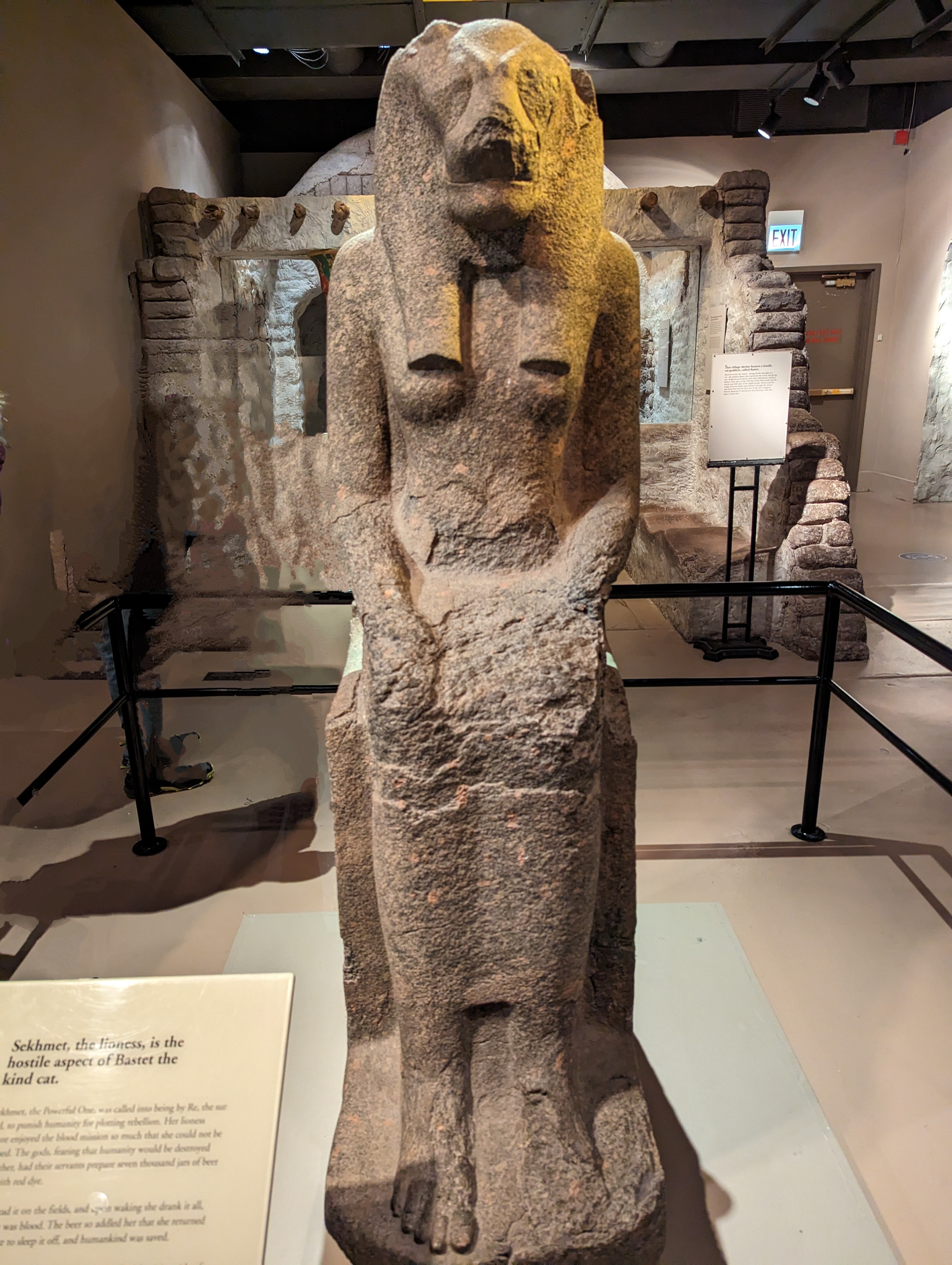
Erika Lenard always knew she was different. Very different. Even at a very young age, she could understand animals, particularly cats. It was a school field trip to the Field Museum of Natural History in Chicago that she heard the voice of Sekhmet. She passed out and the next thing she knew, she was surrounded by her classmates, and she could see the Goddess Sekhmet.

Sekhmet has given her the spells she knows and has instructed her via her cat-familiar Isis.  

She has so far, used her ability to summon cats as a means to help find a missing child and even attack a would-be burglar.  Though Sekhmet has mentioned that she has greater plans for Erika.

Erika is currently being watched by several groups, including the OTO, the Rosicrucians, and the One True Way. Each with their own plans for her.

SekhmetSekhmet

You can get NIGHT SHIFT in print and pdf.  You can get The Warlock for Old-School Essentials and The Warlock for Swords & Wizardry in print and pdf.

--

Want to see more of the #CharacterCreationChallenge? Stop by Tardis Captain's Blog and the #CharacterCreationChallenge on Twitter for more! 

Character Creation Challenge


Wednesday, October 26, 2022

100 Days of Halloween: The Complete Book of Necromancers

DMGR7 The Complete Book of Necromancers (2e)
Yesterday I reviewed the Wizard's Complete Class book and last week I covered the Death Master in Dragon Magazine #76, I thought this would be a good one for today.

In AD&D 1 the example of the Illusionist gave birth to the specialty wizards of AD&D 2nd Ed.  One of those specialty wizards was the Necromancer. Though, unlike the Illusionist, the Transmuter, or even the Evoker, the Necromancer got its own book.  

The Complete Book of Necromancers was one of those books that everyone seemed to want.  I remember picking it up back when it was first published. I paid $15 for it.  Later the cover price jumped to $18 and soon it became very rare. No idea why.  The aftermarket price jumped considerably and I ended up selling mine on eBay back in 2000 for $81. Not a bad deal really. I ended up re-buying again recently at Half-Price Books for $9.

DMGR7 The Complete Book of Necromancers

PDF and softcover book. 128 pages. Black & white interior art. For this review, I am considering my softcover edition and the PDF from DriveThruRPG.

Let's be honest, few classes have had the spotlight quite like Necromancers have had. There have been many attempts before and since. But when comes down to it, the 2nd Ed Complete Book of Necromancers is the gold standard that all other books on Necromancy are compared to. This book is packed. Even the font size is smaller than the other Class books for AD&D 2nd Ed. 

Introduction

Our introduction informs us that this is a book for DMs to make memorable foes. Indeed throughout the book refers to the Necromancers as NPCs.  Even warnings are given about Necromancer PCs of higher than the 9th level. 

Chapter 1: Necromancers

Details "The Standard Necromancer" or even "The Masters of the Dark Art" with minimum ability scores and the rolling methods to gain them (with a table on page 10). Additionally, only humans can be necromancers. Role-playing wise I can see this. Elves would not be concerned with the spirits of the dead and if they wanted to speak to them then they have the books they wrote. Dwarves and Halflings are very much about the here and now. Mechanically though there is no reason to assume they can be, save that this is AD&D.

We get an extended Necromancer (Wizard) XP advancement table to level 30. There are also details about weapon and non-weapon proficiencies. New non-weapon proficiencies are also given.

There are also new Kits for the Necromancer. They are the Archetypal Necromancer, Anatomist, Deathslayer (killer of the undead), Philosopher, and Undead Master. Additionally, two kits from the Complete Book of Wizards and the Complete Sha'ir's Handbook are brought over for use here. They are the Witch and the Ghul Lord.

Chapter 2: Dark Gifts

Covers the powers of Necromancy. This starts with a discussion on Dual Classes characters (remember Human only) each combination is discussed such as Fighter/Necromancer, Thief/Necromancer, Cleric/Necromancer, and the Psionicist/Necromancer.  

Vile Pacts and Dark Gifts cover the powers Necromancers are likely to pick up as they gain the notice of dark powers. 

Despite all the recommendations above, up next is a section on Humanoid Necromancers like Drow and Githyanki. 

Chapter 3: The Price

Details the down-side of dealing with necromancy.  While the social stigma stuff might be a blessing to many necromancers, things like deformities and body afflictions are less welcome. 

Chapter 4: The Dark Art

This deals with the magic and the spells of Necromancy. A great section for any sort of AD&D 2nd ed DM really.  It discusses "Black" or "Criminal" Necromancy, "Gray" or Neutral Necromancy, and "Benign" or "White" Necromancy.

There are 25 new spells from levels 1 to 9 here. Many I note still live on in new editions. 

Chapter 5: Death Priests

Can't let wizards have all the fun. Besides, Necromancy is not just a school of arcane magic but a sphere of divine magic as well. Death Priests (Clerics) get the same treatment as did the Wizards above. Including an advancement table to level 30.  Here different gods/faiths are discussed that might be a home to a Death Priest. The obvious are the God of the Dead. But also the Goddess of Murder, God of Pestilence, God of Suffering, and the Lord of the Undead.

Chapter 6: The Priest Sphere

Cover the necromancy priest sphere and spells. Here we get 18 new priest spells of levels 1 to 7.

Chapter 7: Allies

Covers everything from Apprentices, Henchmen, Familiars (including Undead ones), and Undead minions. Undead minions get the most detail with various sorts of undead discussed. 

There is a great section on Secret Societies. I used this one quite a lot when I developed my Circle of Six Necromancer group.  A group of bad guys that I STILL use today (though only three are still active). 

Chapter 8: Tools of the Trade

Covers potions, poisons, various magical items (including some new), and necromantic lore. 

Chapter 9: The Campaign

Looking back I realize there is a lot in this chapter I *STILL* use. The first is Sahu the Island of the Necromancer Kings. Granted an Ilse of Necromancers is not 100% original and I could have easily got it from Clark Ashton Smith, but this one comes together nicely for AD&D 2nd and still works for me today. 

There are some adventure hooks connected to Sahu and some more connected to the various NPCS found at the end of this section.  That's is the other thing I still use. The NPCs here were quite memorable to me. 

Appendix 1: Common Spells for Necromancers: Lists of spells and their sources by Offensive and Defensive capability.

Appendix 2 and Appendix 3 Necromancy spells for Wizards (2) and Clerics (3).

Appendix 4 Index of Necromantic spells: Alphabetical listing.

There is so much here that would later find homes in the 3e Book of Vile Darkness and the 4e Heroes of Shadow.  And much that is still very useful today.  

I will come back to this one when I decide to work through more of my Isles of Avalon.


The Other Side - 100 Days of Halloween

Sunday, October 23, 2022

100 Days of Halloween: Witchblood

Witchblood
I have reached the end of all the adventures I have on hand for War of the Witch Queens and before I pivot onto my next, and last series for this #100DaysOfHalloween, I really wanted to do something special. I had not found anything perfect yet. I had about four or five different ones that I kept rotating through.

Then I was contacted by Rose Bailey. The author of the great "Die For You" RPG, which I reviewed five years ago to this date in fact. That, and what her game does makes it the perfect choice for today's #100DaysOfHalloween.

Starting today and through the rest of these till Halloween I am moving my posting to the day and exploring the topics in more detail.

Witchblood

PDF. 237 pages. Color cover, black & white interior art.

There is a hardcover option for this book, but I do not have it. Yet. 

I knew this game was going to be good when I started reading it. First off the authors list Howard's Conan and Tanith Lee's "Kill the Dead." Seriously. I LOVE Kill the Dead. I love Tanith Lee. We are off to a great start. Also listed are Russian Folk Tales and Gimm's Fairy Tales.  Also mentioned is Ron Edward's Sorcerer, a game I do rather enjoy.

Rules Basics

Ok we learn that this game is based on One Roll Engine.  Knowledge of that game is not needed here, which is good because while I know it I have never played it.

This is a character focused game so we are going to focus on that.  All characters (called Wanderers here, more on that) have Identities and Qualities. Identies come in pairs and characters have three of them. They are numbered from 0 to 5.  This is a dice pool game where you will roll a number of d10 based on the Identities and one of the Qualities. So anywhere between 3 and 10 dice. Successes, Critical successes and failures are also detailed. 

The Fiction

The world of Witchblood is the Forrest. A giant forest that covers an area about the size of Europe, which tech levels about late 18th early 19th century. Ok another plus for me.  The game discusses how to being to create the world.the 

The game is divided into this Basic Introduction, the Player's Guide, and  Storyteller's Guide.

Player's Section

Chapter 1: We start here with some background setting fiction to get a feel for this world. It sets the mood and stage well. For me it already feels familiar.  I have seen this world before. No. Not in print, but it is the world you see in fairy tales.

Chapter 2: Character creation follows.  The characters are known as Wanderers, people who wander the world to learn more about their world and themselves. You build a character in 6 steps. 1. Name and Concept, 2. Birthright. 3. Calling. 4. Profile. 5. Bonuses. 6. Finishing touches. 

Each Birthright is like your species or race. We have Changeling, Commoner, Ghostborn, Noble, Troll, Witchblood (thus the name), and Zver.  Each gets two pages and helps decide your Indenties and advancement paths. 

Callings are like classes or professions though they go deeper than that. They are the Balladeer, Devoted, Fortune Teller, Robber, Sellsword, Trader, and Wise One. Birthright is balanced against Calling. 

Chapter 3: We get the section on Identies and Qualities. Identities as mentioned before are in pairs, Patience and Cunning, Vigor and Grace, Understanding and Persuasion.  These are subdivided into two more pairs. For example Patience and Cunning also has aspects Generosity and Selfishness and Demonstration and Observation. 

Points in these allow the characters to perform actions.  

Chapter 4 covers these actions. The identies and qualities give you points that you then roll d10s. Roll these and look for matches or sets. So things like riding a horse in a dangerous situation would be Graceful Endurance. Just riding a horse would need no to roll.  Various sorts of rule situations are covered.

Chapter 5 is the chapter on Magic. Magic here is not the organized magic of D&D. Its not even the emotional but structured magic of say Mage. Magic is, in the words of this book, bloody, blunt, and feral. There are many ways magic can manifest. There is "Petty Magic" or minor magics and anyone with a supernatural birthright can have Petty Magics.  Charms are things you can pick up along the way and allow characters to do things others can't. Hunches are ways the characters can manipulate magic around them into effects.  They are not something the character "does" but rather "discovers."  Divination, Pacts,  Lineage and Deeds, Sorcerery, Spoiling,  Gifts and Shapeshifting are all magical talents that have their own means of working.  The variety here is amazing and paints a picture of a world steeped in magic.

Storytelling Section

Chapter 6: This starts our Storytelling section or GMs section. It explains again that this world is largely a combination of two genres; pulp fantasy and fairy tales. This first chapter goes over the elements of these two genres and how the designers break the down the themes and rebuild them in the world of Witchblood. It is an interesting breakdown of both genres and what makes them work.   

We also get some Storytelling tips. There is section on NPCs like Companions, or characters essential to the Wanderers and how they fit into the story, and Locals, or the NPCs that don't interact all the time with the Wanderers. Antagonists are those NPCs that work against the Wanderers. So exactly what they sound like.  Each of these types get their motivations defined. A good guide for any game really.  

Given the nature of magic in this world/game, Enchantments are the NPCs of magic.  They are continuing or permanent magics. So Sleeping Beauty's sleeping curse is a good example of what this sort of thing is.  They are defined more or less like other NPCs. Now this is a FANTASTIC idea. 

Chapter 7: Covers "The Village" or "Where the Mild Thing Are." Ok that is a bit glib on my part. It is about where the humans live.  This covers the various people living in the "Village." There are various roles like Butcher, Miller, Fisher and so on.  There are also people outside the Village, like Bandits, Creeping Trees (LOVE THIS), Predators and so on.

We get themes going on in the Village, like Abuse of Authority, Domestic Violence, Human Sacfrice and more.  This can be a dark game if you choose. 

Chapter 8: Encounters. This covers what is in the Woods outside Village. What I love about this is everything I wanted to be here, is here; So Spirits, Ghosts, and Witches. And things I didn't like The Aunts, the Burned Man, the Dead Robbers, the Hearteater, the Mancutter and more. 

This chapter is great. These encounters are so well detailed and thought out that I would love to add them to other games. Just so much flavor here.

--

This game is so rich in flavor and depth. I once said that even in D&D I don't explore dungeons, I explore characters. This is one of the better character exploration games. The Villiage, the Forest, even the Burned Man and the Mayor. They are all there for the sole purpose of exploring your character.  Think about the fairy tales you know, most are named for the lead character. This is what we have here. 

This game lets you do that. And to do that there is plenty of adversity here. Not just in terms of the features in the Woods but in the themes you are expected to explore. Not all of them will be comfortable or nice. It is Grimdark, but not always nihilistic. Characters work towards making things better OR at least that is their expectation.  In many ways this makes things much darker than say Dungeon Crawl Classics (no slight on DCC).

This would be a great game for a group of good friends to explore. I also think it is a good game for people to use to explore different aspects of themselves. I talked about notions where the characters we make are different extensions of our own psyche. For example my Paladin character Johan is a manifestation of a Freudian Super-Ego and my Witch character Larina is a manifestation of my Jungian Anima. Just to add some armchair psychology to it. This game would do the same.  

The game is fantastic and I am going to have to come back to it later this week.  Maybe create a character.

There is not a ton of art (though the cover is fantastic), but I don't see this as a negative thing. Reading this reminded me of a book of fairy tales and legends I had as a kid where the only art was on the chapter pages. It invoked that same feeling in me and that is likely exactly what the designers wanted.

This not a game to do in an afternoon and be done. This one should be played a few times. I would even suggest on a regular interval; much like you read to your children before bedtime every night, this should be done at the same time in the same place. Really get that feeling you are leaving this world and move into one that sits in that liminal place between dreams and nightmares and being awake.

Can't wait to explore it more.


The Other Side - 100 Days of Halloween


Wednesday, June 8, 2022

Review: Xanathar's Guide to Everything (D&D 5e)

Xanathar's Guide to Everything (D&D 5e)
Less of a full review but more along the lines of reveiw/my thoughts on what was essentially the Unearthed Arcana of D&D 5th Edition.

Why this particular book now?  There are a few of the classes that I am considering back-porting over to B/X era D&D that my kids have expressed an interest in playing.  I may or may not post those.  They are not OGC and I have no plans to even "file the serial numbers off" to try an post them.  Sometime I do things just for me or for fun.

Xanathar's Guide to Everything

2017, Hardcover. 192 pages. Full-color covers and interior art. 

I called this book the "Unearthed Arcana" of D&D 5 and that is more or less on point. Much of the material here appeared in the pages of the online version of Unearthed Arcana.

The book has a wide variety of tools for Players and the DM and all are listed as being optional. This was published in 2017 so there is no hint here of anything that might be "5.5" or "5r" related.

The book is divided into an introduction, three chapters and two appendices.

Introduction

This covers what the book is about, and its origins from the online Unearthed Arcana. Wizards of the Coast has worked to get the layout of their D&D 5th ed books to be one of clean efficiency.  Maybe not as much as say Necrotic Gnome has with OSE, but still really nice.  For example their Table of Contents fits on a single page.

We get a (tiny) bit of background on who Xanathar is. Not being a huge FR fan I did not know but figured it had to be the same beholder from the 1st Edition AD&D Waterdeep and the North.

Xanathar's Guide to Everything pages


There is a page on "The Core Rules" which is really nice to have. There are ten rules that cover most situations.  These are all from the PHB and DMG, but nice to have them repeated here.

Chapter 1: Character Options

We start with a listing of the 31 new subclasses for the twelve base character classes.  Now before someone start screaming "rules bloat" these are not subclasses in the way that AD&D 1st Ed meant them.  These are archetypes of the main twelve classes. So for example the Cleric has the Life and War domains (among others) in the PHB now gains the Forge and Grave domains here.  Each subclass is tailored to the main class. So with Clerics they are "Domains" for Bards they are "Colleges" and Warlocks have "Pacts."   So they are more like the AD&D 2nd Edition Kits.  Both in good and bad ways. There is not much power creep yet. 

This chapter covers about 65 or so pages, so a third of the book. Each main class gets some details that worked for any subclass of that class (Bards get more instruments, clerics have more details on their temples for example). There are a lot of classes in this book. I am not going to get into every subclass here. But I would like to point out a few.

The Bard College of Swords is the spiritual descendent of the AD&D 2nd Bard kit known as the Blade; aka the moment I knew 2nd Ed Power Creep was happening.  The Blade Kit sucked. The fiction for it sucked and the NPC they used as their iconic Blade REALLY sucked. The College of Swords Bards are also called Blades. Their AD&D 2nd ed origins are very plain, BUT there is none of the power creep and thankfully the edgy NPC "Dark" is also gone.

Grave Domain Clerics are the other side of the coin of the Life Domain Clerics.  Where the Life Cleric (PHB) tries to preserve life, the Grave Domain Clerics make sure the dead stay at rest. They are the "good" option of the Death Domain Clerics (DMG).  Cleric Domains have their origin in 2nd Ed and were expanded greatly in 3rd Ed.

Fighters now have an Arcane Archer subclass (known as a Martial Archetype here). This is the 5e update of the 3rd Edition Prestige Class.   Monks (Monastic Traditions) get a Way of the Drunken Master and a Way of the Kensei. Paladins get new Oaths. Rangers get new Archetypes including the Gloom Stalker, a Ranger adept at working in dark places but my favorite is the Monster Slayer.  Rogues get the Mastermind and Scout Archetypes.

The Sorcerers are next.  Their subclasses are known as Arcane Origins, or essentially how you became a sorcerer. In addition to these are some tables on various supernatural marks (think witch mark) and other weirdness due to your bloodline. The one I wanted to convert is the Divine Soul. You have a bit of divinity in your blood.  I would convert these as a B/X Magic-user and allow them to have some free cleric spells based on their divine blood. Cure Light Wounds and Bless for Lawful for example.  Their Charisma would need to be high, like 14 and that would be their Prime Requisite ability too.  While they get the spell for free, they can only still cast it once per day. At the 14th level, they gain their Otherworldly Wings.  There is also the Shadow Magic Sorcerer. This feel like it is from the Shadowfell Player's book from 4e. 

Xanathar's Guide to Everything pages


Warlocks also get new marks and new invocations. There is a Celestial Pact for people that want to play "good" warlocks.  Before anyone dismisses this idea remember that Aleister Crowley had a pact with an angel he called Aiwass and believed was his personal guardian angel to who he made invocations to every day. 

Wizards have Arcane Traditions that more or less equated to "Schools of Magic."

The next section of this chapter covers a variety of character background ideas such as origins and life events with lots of random tables. Like an Old-School collection of random tables.  ALL of them are also perfectly adaptable for use in ANY version of D&D.  They remind me a lot of the tables from the 1st Ed AD&D Unearthed Arcana.  

There are some new racial feats, but unlike 3e or even 4e, 5e is not feat centric. You can even have a character that never takes a feat at all.  These are largely mechanical rule manifestations of possible background ideas.  Have weird eyes? Ok, you have weird eyes, jot it down on your sheet. Do these weird eyes do something special? Well, you might need to take a feat for that then.

Honestly, I did not see anything in this chapter that I could not easily convert to an earlier edition of and D&D. 

Chapter 2: Dungeon Master's Tools

This chapter covers a wide variety of topics but mostly expands on material already in the DMG. Topics like Falling, Sleep, Tying Knots, Adamantine Weapons, and Tool Proficiencies are all discussed. Lots of tools. 

Spellcasting gets a bit of special treatment here. The area of effects on a grid is detailed. d6s are used as visual aids to show how to set up on a grid. 

Some more detail on building monster encounters is also discussed, including single and multiple different types of monsters. There is an eye towards balance, but there is no requirement to do so. The only real advice is "avoid monsters that can drop a character in a single hit."  I have seen more than a few TPKs in D&D 5e. 

Again we are treated to what I can only describe as pages of old-school-style random encounter tables. 

Xanathar's Guide to Everything pages

There is also a section on Traps that while not quite as gleeful as a Grimtooth product, will still make that Chaotic Evil DM smile. How much?  One trap has a save DC of 20 and does 24d10 damage.

There is a discussion on downtime and the reason why my youngest bought this book, magic item creation rules. More magic items are also detailed.

Chapter 3: Spells

This last full chapter covers new spells. About 30 pages worth. The spell economy of 5e is different. There are no Cure Light Wounds, Cure Moderate Wounds, and Cure Serious Wounds spells for example. There is only Cure Wounds and it is a low-level spell for Bards, Clerics, Druids, Paladins, and Rangers.  IF you want a more powerful version you cast it at a higher spell level. So instead of a 1st level spell, it is treated as a 5th level spell for example. This means less print space is needed for spells. 

Xanathar's Guide to Everything pages

Appendix A: Shared Campaign

This covers working on interlinked campaigns and working details out.  Not everything you need to know is here, some more could have been written, but it is a great start.

Appendix B: Character Names

This section is just tables and tables of names. Various cultures (English, French, Egyptian, and more) as well as other nonhuman ones ( Elf, Dwarf, Dragonborn, and more).  The nonhuman includes a personal name and a family or clan name as well.  I did notice that two Tieflings from "Brimstone Angels," Farideh and Havilar, are listed under the Dragonborn names.  Why? Well their adoptive father Mehen (51-52 on a d100) was a Dragonborn so he gave them Dragonborn names. 

So. I picked up this book for the various subclasses, but found a wealth here for many of my other D&D games.

I would say that most of this book is easily adaptable to any version of D&D you choose to try it with.  The exception might be 4e. There are some seriously interlinked mechanics there.

Xanathar's did quite well for a splat book and was even listed as one of Publisher's Weekly best-selling books for December of 2017

Despite his name and picture on the cover there is not a lot of material on Xanathar himself outside of the sidebars.  Wizards would later do a much better job with Tasha in her book.

Xanathar's Guide to Everything covers

The art is amazing as to be expected.  The layout is a step up from the Core Rules and shows what the design team has learned in the last few years.

You can see bits and pieces of D&D's DNA from all editions here, though this is largely true for 5th edition in general. 

Thursday, October 28, 2021

This Old Dragon: Retrospective, Devils and the Nine Hells

It's the last full week of Halloween (October to you mundanes out there) so what better topic than the go over all of the Devils that have appeared in the pages of Dragon Magazine. 

Dragons #75 and #76

This Retrospective could go on for a long time, so I think I am going to limit myself to mostly 1st Edition treatments.  Thanks to TSR bowing to the moral panic of the time we got exactly one article about Devils proper that I can find for the 2nd Ed days.  They pick back up for D&D 3rd Ed, but that is getting beyond the scope of "This Old Dragon."

dragon magazine 13 demons
"The Dragon" Days

These were some of the earliest discussions on the Devils and the Nine Hells. They typically coincide with the release of the AD&D 1st Edtion Monster Manual when we introduced devils to D&D for the first time. Demons had already been added in Eldritch Wizardry for OD&D and had become a staple as these articles show.  This also set the divide of Chaotic Evil Demons and Lawful Evil Devils that persists to this day.  But before we get to devils proper, let's have a look at some early articles on Demons.

The Dragon #13

This issue comes to us from April 1978.  This issue is notable in our discussions for two reasons. First is an ad in the back for the Monster Manual and secondly, there is the brief one-page article on Demon creation.  Ok, so not devils, but the same logic could apply. 

The Dragon #20

I covered this one in a proper This Old Dragon a little bit back. In this issue we have Demonology made easy; or, How To Deal With Orcus For Fun and Profit by Gregory Rihn.  This expands the above article and makes it more AD&D than OD&D.  Again these are demons, but the same rules can apply to devils.

The Dragon #23

This is the third attempt at a random demon system, this time from Gary himself. This one draws from the first two. Random Generation of Creatures from the Lower Planes is exactly what it says on the tin really.  We should make a note here. This is for creatures of the Lower Planes, not just demons.

The Politics of Hell

Dragon #28, or more specifically for me, The Best of Dragon Vol. II gave us a landmark article that is almost entirely fluff; The Politics of Hell by Alexander von Thorn. Mr. von Thorn's only other contribution to Dragon would be 10 issues later with some skill for Traveller. He continued working, mostly on GURPS, and is still active online.  

Politics of Hell

This was a landmark article that among other things it lets us know why Asmodeus, a lesser demon from the Tobit originally, was the ruler of Hell and where Satan was.  The mythology presented here is extremely Judeo-Christian, so that may or may not work for a lot of games and gamers.  It did however introduce me to Astaroth and by extension Astarte. 

Dragon #42 would make a good choice for a future This Old Dragon.  I'll have to see if I have it in my big old box of Dragons.  This is the October 1980 Halloween-themed issue and has a few articles on Devils and even features on of the most famous pictures of Orcus ever.

The article "Demons, Devils and Spirits" comes to us first from Tom Moldvay.  This one features four new spirits that are Lawful Good, Neutral, Chaotic Evil, and Lawful Evil. So a full house!  Ashleigh Parker is next with The Possessors, or demons that can possess others.  Lewis Pulsipher wraps it up with Patron Demons, a forerunner to what we will see in warlock pacts

The Nine Hells by Ed Greenwood

Not since Dragon #28's The Politics of Hell did Devils and Nine Hells get as much attention as they did in the pages of Dragons #75 and #76.  There is a faint hint of the Realms here, but not so much that I felt this was world-specific.  In fact, in the summer of 1983, we were still a couple more years away from the Forgotten Realms being a thing for the rest of us.

The Nine Hells, parts 1 and 2

These two articles cover every layer of the Nine Hells in descending order and discuss the Dukes that rule them, their consorts, their advisors, and even some of the other devils that can be found here.  There are shades of Dante's Inferno here but this is pure D&D.

This series casts such a long shadow that one would be forgiven if they forgot that Gary opened the series with the Devils that would appear in the upcoming Monster Manual II.  This includes the Abishai devils, which are the spawn of Tiamat.   Even though in my personal campaigns I have taken Tiamat out of Hell, the Abishai remain and are still her spawn. 

Combining these we can see there is a certain level of world-building that has gone on past the publications of books like the Deities & Demigods.  In particular, all non-Devil Gods have been kicked out of the Hells.  I took this a step further and even removed Tiamat and placed her on her own plane.

The articles are long and just filled with great information.  It would not be until the later AD&D 2nd Ed years that we would get this much detail on Devils.  

For Dragon #400, Wizards reprinted the entire series, with AD&D 1st ed stats.

Dragon #91

Greenwood (and Gygax) are back a little more than a year later.  Gary has a revised Goristro demon from Monster Manual II. But the big news is Ed has more Nine Hells with some details left out of the original series. It is quite a long one to be honest.  Of note for me there is a devil "Gargoth" that should replace "Astaroth" from the Politics of Hells article. We are told that Astaroth is a demon prince, but that is all.  Astaroth/Astarte just can't catch a break at all.

This is followed by Eight Devilish Questions, something of a FAQ about devils. 

Interestingly enough, this is also the issue that Ed gives us the sword that would change my campaign in very profound ways; Demonbane.

What the Hell is a Baatezu?

Dragon #223

It will be a little more than 10 years before we get anything else about Devils in the pages of Dragon.  This time it is a similar article to Politics of Hell but the new Lords of the Nine only have a little connection to old lords. Some are the same like Dis, others are related, like Fierana, and others still are new or so heavily disguised they might as well be new (Levistus and the Dark Lord respectively).

Honestly, it wasn't until Wizards of the Coast bought TSR that we ever got proper Devils back.  These lords though have been woven back into the history of the Devils since 3e.  Even in this article the term "Devil" to mean these fiends is never used. 

Final Thoughts

Doing a retrospective like this is mostly just time-filling fluff unless I want some takeaways from it all. 

Cosmic Chicken

There seems to be a game of cosmic chicken going on in the early depictions of devils. While there are some that are different in their mythological origins, Geryon from Dante's Inferno and the Erinyes from Roman Myth to name two, the vast majority of these creatures, especially the ones in Dragon, are from Judeo-Christian sources.  That is of course except for The Devil himself.  The authors are willing to pour through all the Medieval demonologies for names, but when it comes to Satan they blink. That is except for one article.  I get it.  There is a lot of baggage with "The Devil" both for religious and cultural reasons.  If you are going to mine "The Inferno" and "Paradise Lost" then why leave out one of the main characters?

Though I will admit I have also struggled in using the Big D in my games, only because it needs to be something special.

Worlds Apart

While a lot of "game rules" can be applied to both demons and devils equally, I am reminded in this retrospective that they are not, and should not be the same.  So while I was mentally looking over the differences and resorting (something that D&D 4e tried to do as well and met with some successes but most criticism from the fans) them into different categories, one category began to show itself in a surprising way.

Gary was better at creating demons and demon-like devils, Ed Greenwood was better at devils.  So for this reason I have decided that in my games demons take a larger interest in the world of Oerth (Greyhawk) and devils take more of an interest in the world of Toril (Forgotten Realms).  There are some exceptions of course.  Orcus has tried to make headway into the Realms many times.  But generally speaking in the games I have run and the D&D novels I have read, this seems to hold true.